vietnam adventure tours, tours in vietnam, travel to vietnam, vietnam adventure travel


VIETNAM ADVENTURE TOURS Vietnam tours, vietnam travel CULTURE Monday, 6/2/2012, 2:37:20 AM  

The vast majority of the population is Vietnamese with minute percentages of Chinese. The Viet culture originated on the delta of the Red River and the Ma River where the Viet people cultivated paddy fields. They led a simple farming life in small villages, usually living around a communal house. Today the people living in the countryside follow this lifestyle. The Viet people are influenced by Confucianism, in particular the principle of respect for their elders. These followings are what you will meet wile travelling in Vietnam.

Silk Pyjamas (Ao Ba Ba)

Ao Ba Ba are the stereotypical black silk pajamas (although ao ba ba can be any color) worn by both men and women in the southern countryside, particularly the Mekong Delta. Ao Ba Ba is also worn in the cities, mostly by women. Look for them in the markets and on the street

Traditional Female Tunic (Ao Dai)
Ao Dai is the traditional "dress" worn by Vietnamese women. This two-piece garment made of silk consists of a long flowing smock worn over baggy trousers reaching all the way to the ground. Teenage school girls trade in their blue and white uniforms for all white Ao Dai, and you'll often see them pedalling their bikes, with the smock of their Ao Dai draped over their handlebars. Older women wear Ao Dai of Various colors, often with intricate patterns and designs, in formal or work settings.

Rice Omelette (Banh Xeo)
This Vietnamese dish resembles an egg omelette, but it is actually rice powder mixed with water, then fried in a skillet with pork, shrimp and bean sprouts. Served with rice paper, Vegetable greens and Nuoc Mam, you break off a portion, roll it up in rice paper with a few greens, then dip it in Nuoc Mam.

Fresh Brewed Beer (Bia Hoi)
Bia Hoi is more a social experience than a beer. In large cities, including Ho Chi Minh City and Hanoi, Bia Hoi is brewed and delivered daily to small establishments. This refreshing, light-bodied beer is served in a plastic jug, usually by the liter. (Although I've also been served Bia Hoi in a 5 liter gas can!) The locals then pour it into a mug over ice. In Hanoi it is frequently served by the glass without ice. (Of course it's not nearly so hot in Hanoi!).
Bia Hoi is most often accompanied by light food, such as peanuts, cha gio, dried squid and even dog meat (Thit Cho). Bia Hoi establishments are informal, the type of place where you throw the peanut shells on the floor. They range from a collection of stools on the sidewalk to large beer-garden type Venues. What they all have in common is friendly camaraderie, cheap food and of course, Bia Hoi!)

Vietnamese spring rolls (Nem Cuon)
The Vietnamese Version of the eggroll, Cha Gio is a seasoned mixture of eggs, ground pork, and sometimes crab or shrimp rolled tightly in rice paper and deep-fried. It is served accompanied by lettuce, cucumber and Nuoc Mam. The proper way to eat these delicacies is to roll them in a piece of lettuce with a slice of cucumber and dip it into the Nuoc Mam ( Fish sauce ).

Rice Porridge (Chao)
The Vietnamese answer to chicken soup, Chao is a rice porridge most often served with small pieces of chicken or beef. Chao is made by mixing white rice with water and simmering until the rice becomes soft and puffy. It is then seasoned with Nuoc Mam and lemon grass and served piping hot. Great for an upset stomach!

Family (Gia dinh)
You can not understand the Vietnamese until you first understand the importance of the family. As in many other Asian countries, family is the foundation of Vietnamese society. Many families have 3 generations living under one roof. Today, however, more and more couples are choosing to move into their own homes. It is traditional for a married couple to care for the man's parents; subsequently, it is very important to have a son! If there is only one son, he and his wife must live with his parents. If there are no sons, one of the daugters may remain unmarried and care for her parents.

Gift (Qua tang)

Gift giving is not just reserved for special occasions; in fact the Vietnamese will find any excuse to give a gift!
Gift giving is a very common practice in both social and business settings. Meet a new friend? Give them a gift! Begin a new job? Buy the boss a gift! Quit your job? Buy the boss another gift! Moving? Buy your friends gifts!
Virtually any public holiday is an occasion to exchange gifts. Gifts need not be elaborate, a book, pen, food, tea, wine and liquor are common gifts. In business, when meeting a new client, try a bottle of Johnny Walker, or a carton of 555 cigarettes, better yet, both!

Conical Hat (Non)
Non, the traditional Vietnamese conical hat is crafted with poems weaved into the design and viewed when held up to the light. Similar, but without the poem, are Non La. These practical lightweight hats and often worn in Hue and virtually everywhere else outside Hanoi and Saigon. Spend a day on a river in the Mekong Delta and you'll understand why! A Non La is great protection from sun and rain.

Fish Sauce (Nuoc Mam)
This native sauce is made from a fermented mixture of fish, water and sugar. It's strong-smelling, sour-tasting and served with just about everything, from cha gio, banh cuon, com trang to...you guessed it...fish!

Rice Noodle Soupe (Pho)
Pho is a large bowl of rice noodles flavored with sliced beef or chicken and fragrant broth and garnished with fresh coriander and bean sprouts. Pho is also a ubiquitous local dish that is most commonly eaten for breakfast; although, it is served throughout the day. The Vietnamese answer to fast food, pho is also rice noodles and meat, most often chicken or beef, but occasionally pork, in a steaming broth. Pho is served with a heaping plate of fresh greens and bean sprouts and usually a selection of spicy sauces and sliced hot red chili peppers. It is eaten with chopsticks and a large spoon; although, the spoon is used more for stirring and mixing than for eating. Throw in some sprouts, a few greens, a pepper or two and some sauce, mix it all up and enjoy! Eat the noodles and the meat, leave the broth.

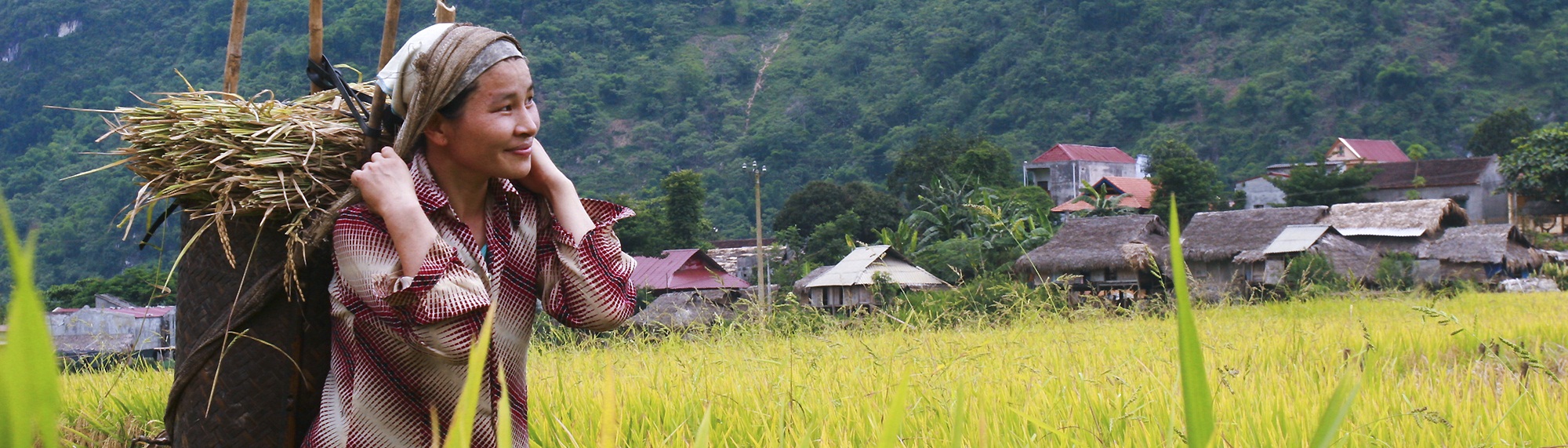
Carrying Baskets (Giong ganh)
Used for millenia, these twin baskets balanced on either end of a pole supported over one shoulder are used to carry vegetables, food, wood, chickens, even children! When placed on the ground, the baskets make an instant display for the market. In the cities, you'll often see women carrying large pots that become instant sidewalk restaurants!

Water puppets (Roi nuoc)

Roi Nuoc is a traditional Vietnamese performance art using colorfully painted and costumed wooden puppets. They most closely resemble marionettes, with jointed arms, legs and heads.
Roi Nuoc are controlled by a puppeteer by way of long poles that are hidden under water. The stage is a small pool, with a scenic backdrop, hiding the puppeteers. Performances are based on traditional folklore or historical events. Music and audio, either recorded or live, accompany the performances.

Rice wine (Ruou gao)
Spend any time in the Mekong Delta or in the northern part of country and you will know all about Ruou Gao. This strong alcoholic beverage is a fermented rice wine, similar in appearance and taste to Japanese Sake. I have never seen it commercially available; however, it is homemade by villagers and readily available throughout Vietnam. If you're lucky, you may be invited to imbibe with the locals. Served in small tea cups, sometimes with guava fruit, this stuff will hit you hard! It doesn't help that there's always someone in the crowd repeatedly shouting, Tram Phan Tram! literally meaning 100%, or Bottoms Up!

Tipping (Tien thuong)
Tipping is not customary in Vietnam; however, it is becoming more common in HCMC, Hanoi and other cities frequented by tourists. Many upscale restaurants and hotels add a service charge to their bills, ranging from 5-10%. Unfortunately this money doesn't always find it's way to the service staff. Deciding whether to tip or not takes some sensitivity. The Vietnamese are a very proud people and a tip can easily offend the recipient; I've literally had tips returned!
Generally in HCMC, a tip of 5-10% of a restaurant bill is sufficient if the service is good. I usually just leave my change. Tipping taxi drivers is neither customary nor expected. (Although I've noticed some of these guys never seem to have any change!) Guides and drivers should be tipped at the end of your trip. At hotels, I usually tip the bellman 20.000VND for carrying my bags. In small hotels, particularly for stays of more than a few days, it is appropriate to tip the maid and desk staff at the end of your stay, better yet, buy them a small gift!
In a country where most service people earn well under US $100/month, a few thousand Dong is enormously appreciated. But there are times when it can be taken the wrong way. At small hotels, the staff frequently goes out of their way to answer questions, reconfirm plane reservations, look up addresses and the like. You may even be invited to join the staff for a meal! This is a great honor and their way of saying they consider you a friend. Remember, friends don't tip friends! A tip, no matter how well-intentioned ,will invariably be taken as an insult, or worse a proposition!
Your best bet in this situation is to buy small gifts for the staff, such as pens, writing paper or hair clips for women and cigarettes for men. If you must give money, give it to every member of the staff and only when you depart. Better yet, buy food during your stay and share with the staff. Fruit, pastry, even pizza are always a big hit. Remember, while these items are readily available to us, they are beyond the means of most Vietnamese.

Green Tea (Tra Xanh)
Tra xanh is by far the most consumed beverage in Vietnam. It is served both hot Tra Nam, and iced Tra Da. Many hotel rooms offer a complementary thermos of hot water and a tea set. Vietnamese tea is slightly different from the tea we typically drink in the West. Loose tea leaves are steeped in a small teapot and then served in tiny tea cups. Green tea is most often drank in the countryside; black tea is consumed in the cities. Tra is so ingrained in the culture, it's simply second nature. If you stop into a shop to inquire about renting a motorbike, you'll likely be invited to sit and have a cup of tea. Many restaurants will automatically serve you tea after lunch and dinner.When going to a coffee shop and order a cup of coffee, you'll be served coffee and a hot pot of tea.

Pedicab or Rickshaw (Xichlo)

A xichlo is a 3-wheeled, pedal-powered rickshaw. Available for hire by the trip, hour or day, xichlos are a convenient and nostalgic means of transportation. Xichlos are widely available in Ho Chi Minh City, Hanoi and Hue. Enjoy this classic form of transportation while you are in Vietnam.

The Vietnamese Lunar New Year ( Tet )
There is no more colorful time to be in Vietnam than during the days leading up to Tet Nguyen Dan, the most important festival of the year for Vietnam's Kinh ethnic majority. Since the first day of lunar year is thought to set tone for the next 12 month, everyone strives to plan the perfect Tet. In Hanoi, the narrow lanes of the Old Quarter buzz with activity. Everyone is in a rush to get a haircut, buy new clothes, spruce up their homes, visit friends, settle outstanding debts, and stock up on traditional Tet delicacies. Businesses hang festive red banners which read "Chuc mung nam moi"(Happy New Year) and city streets are festooned with colored light. Stalls spring up all over town to sell nothing but cone -shaped kumquat bushes. Others sell flowering peach trees, symbols of life and good fortune which people bring in to their homes to celebrate the coming of spring. As vendors pour into the city with peach trees strapped to their bicycles, the streets look like moving pink forests
In the south, people bring yellow apricot branches into their homes and place a coconut, a papaya, a mango and a custard apple on the family altar. Spoken in the southern dialect, the names of these fruit form a prayer for success and fulfillment.
Three crucial meetings are said to take place on Tet. The first meeting is between three family deities: Tien su, the deity responsible for introducing the family to its traditional career; Tho Cong, who oversees the land where the family lives; and Tao Quan, the Kitchen God, who cares for the family's food. The second meeting takes place between the dead and the living. People place offerings of food and drinks on their ancestral altars, light incense, and invite their ancestors to join the family's Tet celebrations. The third meeting involves the immediate family. On New Year's Eve, family members gather for a dinner of traditional food like banh chung (a square cake made of sticky rice stuffed with beans and pork), mang (a soup of boiled bamboo shoots and fried pork) and xoi gac (orange sticky rice). This is followed by a visit to the local pagoda and perhaps an outing to see the town's fireworks.

Dating & Marriage

The sexual revolution was late to arrive in Vietnam; more accurately, it arrived during the sixties and promptly departed on the last American chopper in 1975. But the tag team of AIDS and the Internet sparked a new sexual revolution at the turn of the century. Young men and women suddenly had access to information about sex and contraception - taboo subjects largely absent in Vietnamese society under the Communist government. This new wealth of information has dramatically altered the younger generation's views about dating, sex and marriage. Until this decade the vast majority of Vietnamese brides remained virgins until their wedding day. Today that percentage is dropping faster than a bride's dress on wedding night.
Economic equality is not catching up quite as fast. A large proportion of women work outside the home; however, you'll find that women are still considered second-class citizens in social situations. I have been entertained in several Vietnamese homes where the men talked, drank and dined for hours, while the women were relegated to the kitchen, even during dinner.
Public displays of affection between members of the opposite sex are frowned upon and are almost never seen. Ironically, Vietnamese of the same sex frequently hold hands, walk arm-in-arm, or ride down the street with their hand on a friend's shoulder. (I still cannot get used to construction workers in hardhats walking down the street with their arms around each other!) Men in particular will find that people will touch you, squeeze your arm, pat your back and put their arm around your shoulder. This includes men, boys and young girls, but never women! Do not be alarmed, this is considered perfectly normal.
Dating is a little more complicated than in most western countries. If a boy asks a girl for a date, they may go for a ride around town or perhaps for a cup of coffee, but never a movie. (Any girl who would got to see a film on the first or second date is considered easy!) If they decide to go steady, the boy will ask the girl if he can meet her family. If she agrees, he'll visit the house, usually on a Saturday or Sunday night, and meet the entire clan. He will then visit regularly, usually once a week on Saturday or Sunday night. The decision to marry is of course a family one. When a couple decides to marry, they first ask their parents for permission. Having been granted permission, the couple then visits each set of parents, usually bringing gifts of food or wine.
Male travelers will frequently be asked by both men and women (and even children!) if you like Vietnamese girls. (Yes, "girls", "women" are married in Vietnam!) The appropriate answer is yes; in fact, the only answer is yes, as you will offend them if you respond with anything else! Don't be surprised, however, if you receive a cool to downright hostile reception when you are seen with a Vietnamese woman (Oops - I mean girl!) in public. Apparently the Vietnamese take great pride in Western men marrying Vietnamese "girls", but frown on them dating. Go figure!

Religion (Ton giao)
Vietnam has a diverse mix of religions, including Buddhism, Confucianism, Taoism, Catholocism, Protestants, Muslims, Hinduism and even a home grown religion, Cao Daism. Buddhism is the dominant religion and you will see numerous temples throughout Vietnam as well as the traditional alters in many homes and hotels. Catholicism is also strong in Vietnam with about 10% of the country's population , undoubtedly a result of 100 years of French rule. There are a number of beautiful Catholic churches throughout the country.
Vietnam is also home to a unique religion called Cao Dai, a religious cocktail of all the world's major faiths. An unusual religion, Cao Daism, was founded in Vietnam in 1926 by Ngo Minh Chieu. The Cao Dai religion is a melting pot of Buddhist, Christian, Taoist and Confucianist ideals. Part cult, part political organization, part religion, it developed quite a following very quickly. As you can imagine, this did not go over well with the South Vietnamese government or later the Communist government, and for a while Cao Daism almost died out. Today Cao Daism is once again flourishing, with an estimated 2 million followers in Vietnam. They have temples throughout South Vietnam and those at Tay Ninh and Danang are popular tourist sites and well worth a visit! After reunification in 1975, the government sought to supress religion and it's influence on the people. The result is that today, many young people consider themselves atheists. But as in other Communist countries, religion never really left Vietnam

LIVE SUPPORT
travelagentsupport  travelagentsupport
TRAVEL PARTNERS
Sports Hotel
Lotus Hotel
Nha Trang
Novotel Hotel
Little Cottages
Dai Nam hotel
Sasco Blue Lagoon
Sai Gon Con Dao resort
www.jysk-rejsebureau.dk
 
© 2008 VIETNAM ADVENTURE TOURS INC. ALL RIGHTS RESERVED - PRIVACY POLICY
Address: 27 Giang Van Minh , Ba Dinh ,Ha Noi ,Vietnam - Email: info@vietnamadventuretours.com.vn
Tel: (84-4) 39905892 - Fax: (84-4) 39335156 - Mobile: (+ 84 ) 913377555
Powered and Hosted by Truong Thanh Design - Website, Logo Design

vietnam adventure tours, tours in vietnam, travel to vietnam, vietnam adventure travel