vietnam adventure tours, tours in vietnam, travel to vietnam, vietnam adventure travel


VIETNAM ADVENTURE TOURS Vietnam tours, vietnam travel PACKAGE TOURS Saturday, 4/9/2010, 5:44:24 PM  

VIETNAM WORLD HERITAGE SITES

Vietnam World Heritage Sites,Saigon is the largest of Vietnamese cities, with the hustle and bustle of Vietnamese life visible everywhere. There are street markets, sidewalk cafes and sleek new bars. The city churns and bubbles. Yet within this teeming metropolis are 300 years of timeless traditions and the beauty of an ancient culture. To the west of the city is District 5, the huge Chinese neighborhood called Cholon, which means 'Big Market'.Da nang,Journey south west of Danang to Vietnam's most important Cham site, one of the most stunning sights in the Hoi An area...
 Detail Itinerary

Vietnam World Heritage Sites

Day 1:  Sai Gon – Arrival ( D )
Upon arrival at Tan Son Nhat Airport our guide will accompany you to your hotel and assist you with your checking-in. Whilst there are no activities planned for today, your guide will be on hand to offer any advice and assistance regarding your free time. This evening, your guide will take you out to dinner at one of Saigon's superb restaurants.Overnight in Saigon.

Day 2 : Saigon ( B , L , D )
Sightseeing Saigon and Cholon (Chinatown)
Saigon is the largest of Vietnamese cities, with the hustle and bustle of Vietnamese life visible everywhere. There are street markets, sidewalk cafes and sleek new bars. The city churns and bubbles. Yet within this teeming metropolis are 300 years of timeless traditions and the beauty of an ancient culture. To the west of the city is District 5, the huge Chinese neighborhood called Cholon, which means 'Big Market'.
NOTRE DAME CATHEDRAL: built between 1877 and 1883, it is set in the heart of Saigon's government quarter. It has a neo-Romanesque form and two high square towers, tipped with iron spires. In front of the cathedral is a statue of the Virgin Mary.
CENTRAL POST OFFICE: a French-style building with a glass canopy and iron frame, situated next to the Notre Dame Cathedral. The structure was built between 1886 and 1891 and is by far the largest post office in Vietnam.
CITY HALL: completed in 1908, also known as “Hotel de Ville”, and located at the northern end of Nguyen Hue Boulevard. With its ornate gingerbread façade, it looks like the town hall of a French town. (May be viewed from the outside only).
OPERA HOUSE: built around the turn of the century and first renovated in the 1940s, the building housed the lower division of the National Assembly. Today it is a Municipal Theater and also known as the Saigon Concert Hall. (May be viewed from the outside only).
JADE EMPEROR PAGODA: was a key meeting place for Chinese secret societies. It has very colorful and mysterious ambience.
REUNIFICATION PALACE: this was the Independence Palace of the South Vietnamese president and was stormed by tanks on 30 April 1975, signifying the fall of South Vietnam. It has been preserved in its original state.
WAR REMNANTS MUSEUM: collections of weapons and photographs from two Indochina wars are exhibited along with the original French 'Guillotine' brought here in the early 20th century.
BEN THANH MARKET: the central market of Saigon, which, with the surrounding streets, makes up one of the city's liveliest areas. Everything commonly eaten, worn or used by the average resident of Saigon is available here.
GIAM LAM PAGODA: the oldest pagoda in Saigon, built at the end of the 17th century. Because the last reconstruction here was in 1900, the architecture, layout and ornamentation remain almost unaltered by the modernist renovations that have transformed so many other religious structures in Vietnam. Ten monks live in this pagoda, which also incorporates aspects of Taoism and Confucianism.
BINH TAY MARKET: Cholon's main marketplace, much of the business conducted here is wholesale.
THIEN HAU PAGODA: built by the Cantonese congregation in the early 19th century. The pagoda is one of the most active in Cholon and is dedicated to Thien Hau. It is said that she can travel over the oceans on a mat and ride the clouds to wherever she pleases.Overnight in Saigon.

Day 3 : Saigon ( B , L )
Excursion to My Tho with boat trip on the Mekong
MY THO: capital of Tien Giang Province. The economy is based on fishing and the cultivation of rice, coconuts, bananas, mangoes, longans and citrus fruit.
MEKONG DELTA: this is the southernmost region of Vietnam, formed by sediment deposited by the Mekong River. Silt deposits extend the delta shoreline at the mouth of the river by as much as 79m per year. The area is known as Vietnam's 'bread basket' and produces the rice which feeds the entire country. Visit one or two of the islands with traditional handcrafts, bee farms and coconut candy production.
DRAGON ISLAND: the island has many longan orchards which can be visited and the lush, palm fringed shores of the island are lined with wooden fishing boats.
PHOENIX ISLAND: until his imprisonment and the consequent dispersion of his flock, the coconut Monk (Ong Dao Dua) led a small community on this island.
VINH TRANG PAGODA: a beautiful and well maintained sanctuary, this is the oldest pagoda in the delta. The charitable monks here provide a home to orphans, disabled and other needy children.Overnight in Saigon.

Day 4:  Saigon - Hue ( B , L , D )
Flight from Saigon to Hue
Sightseeing old Imperial City
IMPERIAL CITY: located in the Citadel, it was built in the early 19th century and modeled after the Forbidden City in Peking. There are numerous palaces and temples within these walls, as well as towers, a library and a museum.
NGO MON GATE: the principal entrance to the Imperial Enclosure, facing the Flag Tower. The central passageway with its yellow doors was reserved for use by the emperor, as was the bridge across the lotus pond.
THAI HOA PALACE: built in 1803 and moved to its present site in 1833, Thai Hoa Palace is a spacious hall with an ornate roof of huge timbers supported by 80 carved and lacquered columns.
HALLS OF THE MANDARINS: these buildings, in which the mandarins prepared for court ceremonies held in the Can Chanh Reception Hall, were restored in 1977.
NINE DYNASTIC URNS: these were cast in 1835-36. Traditional ornamentation was then chiseled into the sides of the urns, each dedicated to a different Nguyen sovereign.
FORBIDDEN PURPLE CITY: this was reserved for the personal use of the emperor. The only servants allowed into the compound were eunuchs, who would pose no threat to the royal concubines. (Today the site is in ruins).
Visit Dong Ba Market
DONG BA MARKET: a local market near the Imperial City.Overnight in Hue.

Day 5 : Hue ( B , L )
Sightseeing Thien Mu Pagoda and Tomb of Emperor Minh Mang with boat trip
THIEN MU PAGODA: just outside of Hue, on the bank of the Perfume River, this was a hotbed of anti-government protest during the early 1960s. Behind the main sanctuary of the pagoda is the Austin motorcar which transported the monk Thich Quang Duc to the site of his 1963 self-immolation.
TOMB OF EMPEROR MINH MANG: a complex built in 1840 by King Minh Mang, known for its magnificent architecture, military statuaries and elaborate decorations. It is perhaps the most beautiful of Hue's pagodas and tombs.
Sightseeing Imperial Tombs of Tu Duc and Khai Dinh
TU DUC TOMB: Emperor Tu Duc, who ruled Hue more than 100 years ago, built his tomb when he was still alive and used it for meditation, reading and theater performances. There are pavilions in a tranquil setting of forested hills and lakes. The tomb was constructed between 1864 and 1867. Tu Duc, who was the longest reigning Emperor, lived a luxurious life.
KHAI DINH: this was the last monument of the Nguyen dynasty and was constructed between 1920 and 1931. It sits magnificently on the slopes of Chau E Mountain in Chau Chau Village. It has a long staircase flanked by dragons. There are ceiling murals and ceramic frescoes.Overnight in Hue.

Day 6 : Hue - Danang ( B , L , D )
By vehicle from Hue to Danang
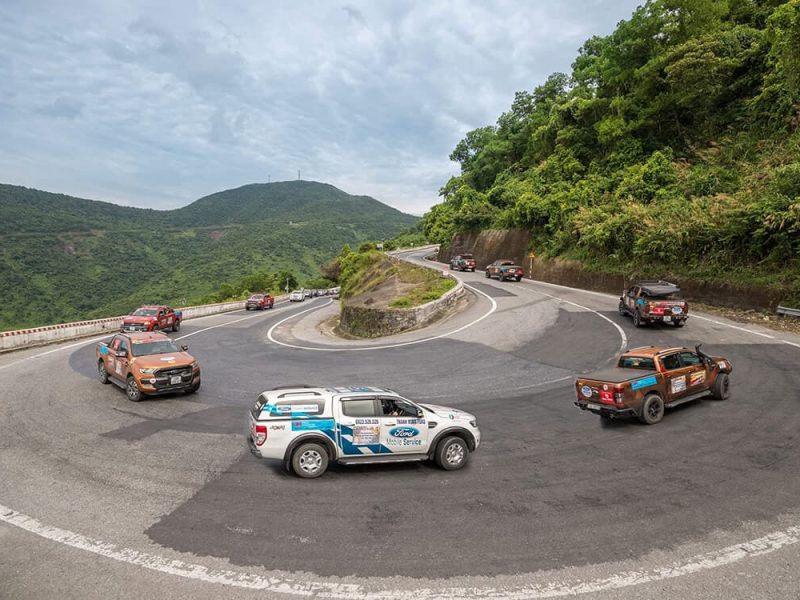
Journey south along Highway 1 past the Hai Van Pass and Lang Co.
HAI VAN PASS: the pass crosses over a spur of the Truong Son Mountain Range that juts into the South China Sea. It is an incredible mountainous stretch of highway with spectacular views.
LANG CO: a pretty, island-like stretch of palm-shaded sand with a crystal-clear lagoon on one side and many km of beachfront facing the South China Sea.
Sightseeing Danang, China Beach and at the Marble Mountains
Vietnam's fourth largest city marks the northern limits of Vietnam's tropical zone, boasting a pleasant year-round climate.
CHAM MUSEUM: founded in 1915 by the Ecole Francaise d'Extreme Orient, the open-air collection of Cham sculpture is the finest in the world. Many of the sandstone carvings are breathtaking.
CHINA BEACH: made famous in the American TV series of the same name, it stretches for many kilometers north and south of the Marble Mountains. During the war, American soldiers were airlifted here for 'rest and relaxation'.
MARBLE MOUNTAINS: five stone hillocks, once islands, made of marble. Each is said to represent one of the five elements of the universe. The largest and most famous, Thuy Son, has a number of natural caves in which Buddhist sanctuaries have been built over the centuries. When the Champas ruled this area, these same caves were used as Hindu shrines.
Overnight in Danang.

Day 7: Danang ( B , L )
Excursion to My Son
Journey south west of Danang to Vietnam's most important Cham site, one of the most stunning sights in the Hoi An area.
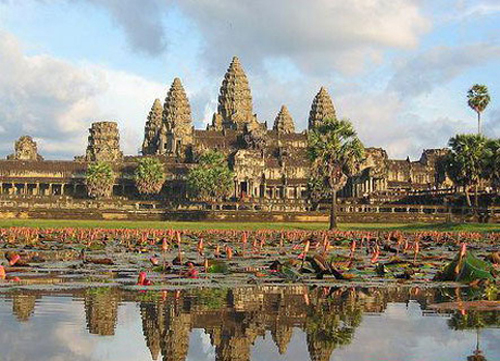
MY SON: considered to be Champa's counterpart to Angkor or Bagan, the great cities of South East Asia's other Indian-influenced civilizations. The monuments are set in a verdant valley surrounded by hills and overlooked by the massive Cat's Tooth Mountain.
TRA KIEU: formerly known as Simhapura, it was the first capital city of Champa, serving in that capacity from the 4th through to the 8th century. A large number of artifacts, including some of the finest carvings in the Cham Museum in Danang, were found here.Overnight in Danang.

Day 8: Danang - Hoi An  ( B , L , D )
By vehicle from Danang to Hoi An
Journey south past the Marble Mountains and small villages.
Sightseeing Hoi An by cyclo
Hoi An is a picturesque riverside town south of Danang. Known as Faifo to early western traders, it was one of South East Asia's major international ports during the 17th, 18th and 19th centuries. It is best to visit some of the following sites of Hoi An by walking around and/or by cyclo.
QUAN CONG TEMPLE: founded in 1653, the main altar is dedicated to Quan Cong, whose partially gilded statue is in the central altar at the back of the sanctuary. Stone plaques on the walls list contributors to the contruction and repair of the temple. The temple was open to all Chinese traders or seamen and is dedicated to Thien Hau – it’s a small chinese style temple with a lintel gate, a rockery courtyard and lucky animals depicted in statuary.
PHUOC KIEN PAGODA: Chinese pagoda built around 1690 and then restored and enlarged in 1900. It is typical of the Chinese 'clans' that were established in the Hoi An area. The temple is dedicated to Thien Hau Thanh Mau (Goddess of the Sea and Protector of Sailors and Fishermen).
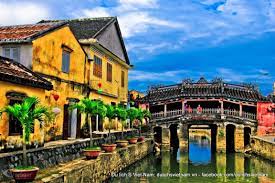
JAPANESE COVERED BRIDGE: the first bridge on this site was constructed in 1593. It was built by the Japanese community of Hoi An to link them with the Chinese quarters across the stream. The bridge was provided with a roof so it could be used as a shelter from rain and sun.
TRAN FAMILY CHAPEL: this house for worshipping ancestors was built about 200 years ago with donations from the family members. The Tran family traces its origins to China and moved to Vietnam around 1700. The architecture of the building reflects the influence of Chinese and Japanese styles.
SA HUYNH MUSEUM: located near the Japanese covered Bridge, it contains exhibitions from the earliest period of Hoi An's history.
PHUNG HUNG HOUSE: one family has been living here for already 8 generations. The house is a combination of Vietnamese, Japanese and Chinese style.Overnight in Hoi An.

Day 9: Hoi An - Danang - Hanoi  ( B , L , D )
Transfer from Hoi An to Danang Airport
Flight from Danang to Hanoi
Sightseeing Hanoi (half day)
Hanoi, a city of lakes, shaded boulevards and public parks, is the capital of Vietnam. It is a very attractive city with French style buildings and less traffic than other cities in Asia.
ONE PILLAR PAGODA: built by the Emperor Ly Thai Tong, who ruled from 1028 to 1054. Constructed of wood on a single stone pillar, it is designed to resemble a lotus blossom.
TEMPLE OF LITERATURE: founded in 1070 by Emperor Ly Thanh Tong, who dedicated it to Confucius in order to honor scholars and men of literary accomplishment.
HOAN KIEM LAKE: right in the heart of Hanoi, this lake contains an islet with the tiny Tortoise Pagoda, topped with a red star.
OPERA HOUSE: a magnificent 900-seat opera house built in 1911. (May be viewed from the outside only).
Visit Water Puppet Show
WATER PUPPET SHOW: a fantastic art form originating in northern Vietnam, best seen in Hanoi. The Municipal Water Puppet Theater is located on the shore of Hoan Kiem Lake.
Overnight in Hanoi.

Day 10 : Hanoi - Halong ( B , L , D )
Visit Ho Chi Minh Mausoleum
HO CHI MINH MAUSOLEUM: in the tradition of Lenin and Stalin before him and Mao after him, the final resting place of Ho Chi Minh is a glass sarcophagus set deep in the bowels of a monumental edifice that has become a site of pilgrimage. (Closed Mondays and Fridays).
By vehicle from Hanoi via Hai Phong to Halong
Journey west along Highway 5, across Hai Hung Province.Overnight in Halong.

Day 11 : Halong - Hanoi ( B , L )
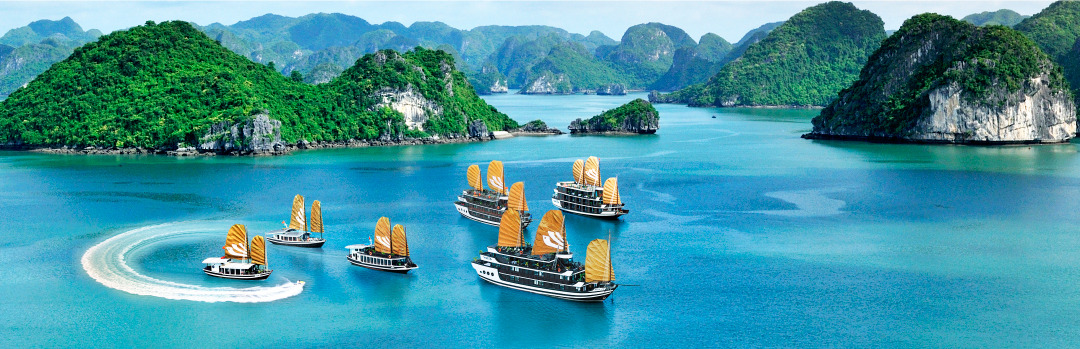
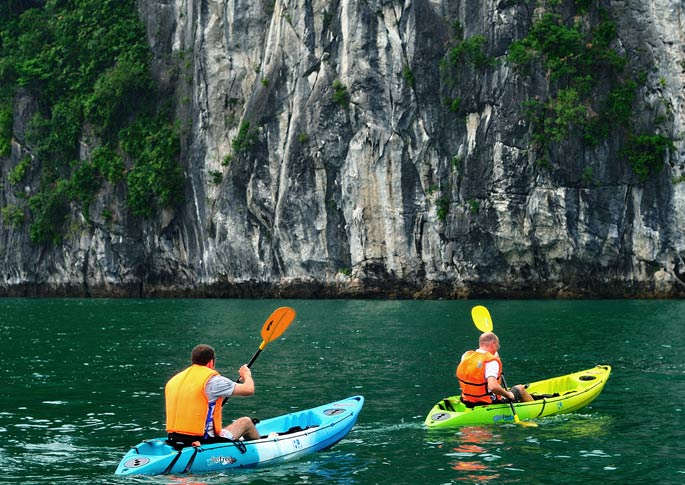
Boat trip Halong Bay (4 hours)
This four-hour boat ride explores Halong Bay, passing the islands of Trong, Mai, Am, Chen and Cong Troi (Heaven Gates). Stop at one of the islands and visit of one of the following caves.
HANG DAU GO: a huge, three-chambered cave, which is reached via 90 steps. The cave derives its Vietnamese name from the third of the chambers, which is said to have been used by Tran Hung Dao during the 13th century to store bamboo stakes used against the Mongol invaders.
BO NAU: the "Pelican" caves.
THIEN CUNG: "Heaven Palace."
By vehicle from Halong to Hanoi
Journey around Halong Bay to Hai Phong and west along Highway 5, across Hai Hung Province.Overnight in Hanoi.

Day 12 : Hanoi - Departure ( B )
Today we have free time until transfer to airport for your fligt to your home .


The trip includes
* Accommodation (double/twin sharing)
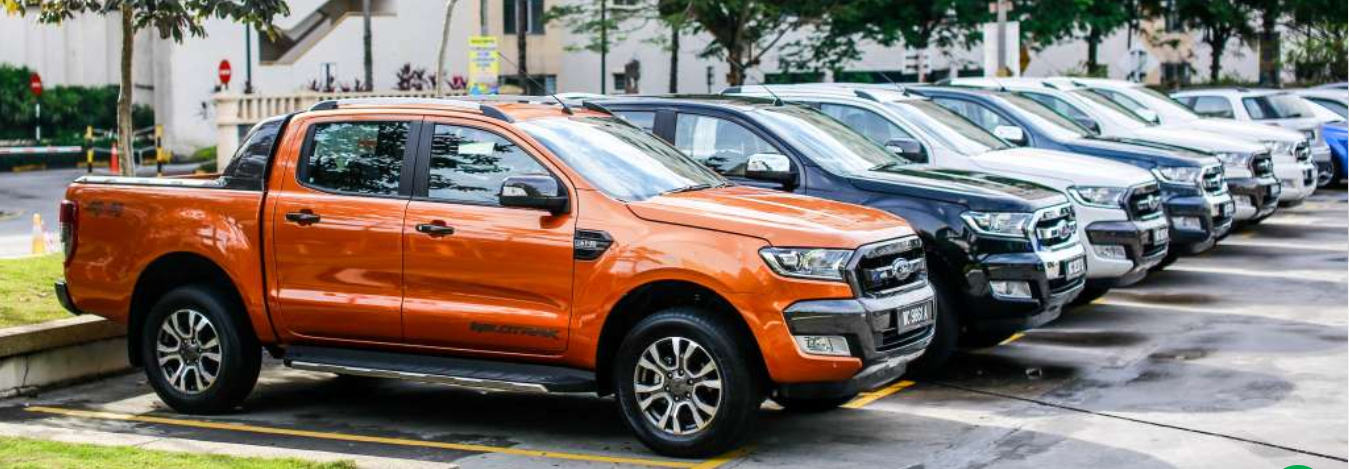
* Private pick up and transfer (A/C van)
* English/French speaking tour guide
* Meals specified in tour program
* All Internal/domestic air tickets per program
* Boat trips specified the tour program
* All entrance, permission and visiting fees

The trip excludes  
*Visa to Vietnam
* Departure airport tax
* Meals which are not included in the program
* Personal travel & medical insurance
* International flights to and from Vietnam
* All personal & daily expenses
* All gratuities and tips to drivers and guides


Class Size of group
1 person 2-3 person 4-5 person 6 person up
LIVE SUPPORT
travelagentsupport  travelagentsupport
TRAVEL PARTNERS
Sports Hotel
Lotus Hotel
Nha Trang
Novotel Hotel
Little Cottages
Dai Nam hotel
Sasco Blue Lagoon
Sai Gon Con Dao resort
www.jysk-rejsebureau.dk
 
© 2008 VIETNAM ADVENTURE TOURS INC. ALL RIGHTS RESERVED - PRIVACY POLICY
Address: 27 Giang Van Minh , Ba Dinh ,Ha Noi ,Vietnam - Email: info@vietnamadventuretours.com.vn
Tel: (84-4) 39905892 - Fax: (84-4) 39335156 - Mobile: (+ 84 ) 913377555
Powered and Hosted by Truong Thanh Design - Website, Logo Design

vietnam adventure tours, tours in vietnam, travel to vietnam, vietnam adventure travel